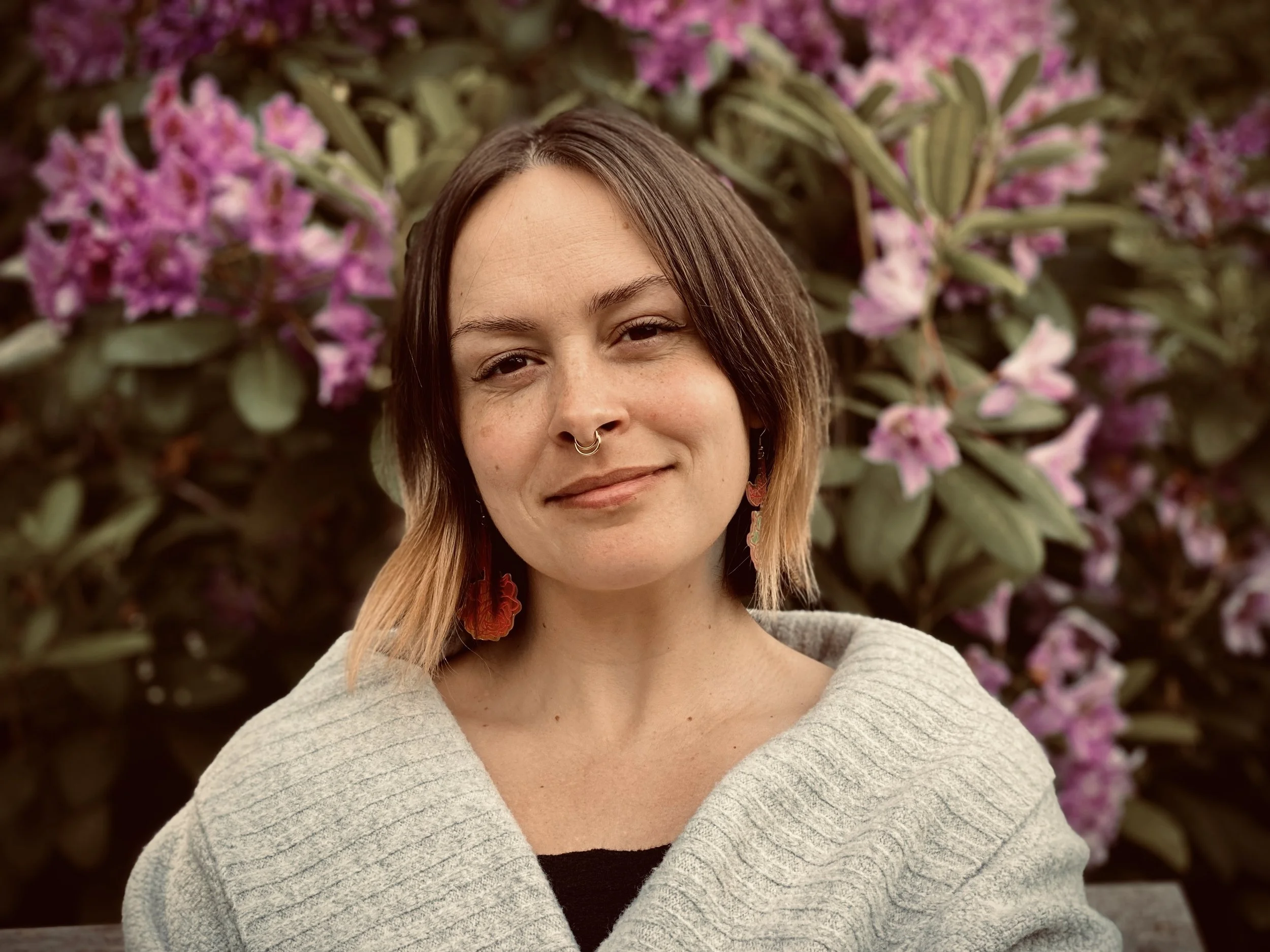

Meet your neurodivergent therapist
FENNEL HOPPE, LCSW
About Unfurling Ferns Therapy
Neurodivergent people deserve spaces that allow them to show up as complex and multi-faceted people. My goal at Unfurling Ferns Therapy is to help create that space. Here we can explore shared experiences relating to neurodivergence, giving name to experiences with psycho-education to deepen understanding, exploring guilt or shame where it comes up and exploring internalized narratives around disability.
We each have our own unique story the deserves space to be told, and we exist within a community where we can build connection and understanding through each other.
My Story
I’m a Licensed Clinical Social Worker (LCSW) with training in psychodynamic relational therapy at Smith College School for Social Work, and in comprehensive diagnostic assessment of adult ADHD and Autism — training in ADHD evaluation and treatment at Northwest ADHD Treatment Center, and in Autism evaluations through trainings by Properties of Light and Dr.Marilyn Monteiro’s MIGDAS-2 trainings, in addition to independent learning and supervision.
I am neurodivergent myself, diagnosed as Autistic and ADHD in my early 30s. This lived experience helps inform my work, and guides my further research and inquiry into neurodivergent experiences, and shapes how I show up in the therapeutic space and how I practice.
My approach is depth-oriented and relational, focused on creating a safe and trusting space where we can explore together—exploring stories and narratives, slowing down to notice what comes up, and integrating small achievable goals that help people grow at their own individual pace.
While I integrate solutions-focused work and skills-based interventions, the goal is never to ‘fix’ you or become less neurodivergent—but to learn more about who you are as a person and what you need to live a life that feels authentic and supportive.
A Glimpse of Me
Outside of work, I’m an avid gardener and love spending time in nature. I enjoy reading, crafting, playing games, spending time with kitties, and going on walks.
Identities: white, non-binary (they/them), queer, Autistic and ADHD, chronically ill (POTS and hEDS).
Education
Smith College School for Social Work - MSW, Clinical Social Work (2023)
Portland State University - B.S. in Psychology (2018)
Licensure
Licensed Clinical Social Worker (LCSW) - Oregon
License number: L17450
Professional Memberships
Professional Member, CHADD (Children and Adults with ADHD)
American Professional Society of ADHD and Related Disorders (APSARD)

MY CLINICAL FOCUS
My Clinical Focus
I work with neurodivergent teens and adults, many who are exploring their identities, trying to make sense of their patterns, and looking for therapy that feels aligned with how their brain works.
Who I Work With
Neurodivergent teens and adults, including:
ADHD and Autistic teens (14+) and adults
People who suspect they may be ADHD or Autistic, or self-identify
People who have a formal diagnosis and want deeper understanding
People with overlapping or complex presentations, such as:
Dysthymia, anxiety, and depressive disorders
OCD
PTSD and complex relational trauma
Bipolar I/II
BPD
People who haven’t felt understood in therapy before:
Many prior diagnoses, but none have fully fit
Tried therapy for years without feeling seen
Felt pressured to “perform” or act neurotypical
Prefer slower pacing, time to think, and permission to be themselves
High achievers, gifted, and 2E individuals:
Deep thinkers who carry a lot internally
Highly capable on the outside and struggling privately
Navigating perfectionism, burnout, and chronic overwhelm
Communication and emotional expression differences:
Alexithymia
Difficulty with interoception
Slower processing
Hyperlexic
Rich inner worlds that are hard to put into words
Older adults:
Seeking clarity later in life
Reflecting on decades of “feeling different”
Exploring identity, grief, and meaning with new language

MY APPROACH
My Approach
My approach is warm and relational, and supportive of your own pace. I want therapy to be a place where you can unmask, notice all the different parts of yourself, and trust that every part is welcome here.
People often heal not through pressure or correction, but through stability, attunement, and acceptance.
I draw from existential, person-centered, humanistic, anti-oppressive, relational, and feminist approaches, supported by psychodynamic training and a person-in-environment systemic lens. I pay attention to how identity, relationships, nervous system patterns, and larger systems shape your experience.
How I Practice
Warm and collaborative
Clear and direct communication
Respect for different processing speeds, sensory needs, and communication styles
Space for processing grief, shame, and burnout
My work is grounded in disability justice and liberation psychology. I help name systems of oppression and power, support self-advocacy, and help people understand their experiences through these contexts.
How I use skills
When skills are helpful, I draw from ACT, DBT, CBT/CBT-I, somatic strategies, and mindfulness. I also integrate collective wisdom from the neurodivergent community and my own lived and clinical experience.
I treat skills as experiments. If something doesn’t work, that’s okay — you don’t need to shape yourself to fit an intervention, we shape them to fit you. Therapy is most effective when it’s flexible and individualized.
My Approach to Evaluations
My evaluations are collaborative, strengths-based, and narrative. I take my time, gather information through conversations and use empirically based tools to help inform diagnosis.
Conversation-based, narrative, and reflective
Strengths-focused
Empirically based tools (DIVA-5, MIGDAS-2, SRS-2, etc.)
Exploration of co-occurring conditions
Clear, detailed reports (often 35-50 pages) with practical recommendations
My goal is for the evaluation to feel validating, thorough, and genuinely useful in accessing support, accommodations, and gaining clarity.